Closet Organizers for Renters
Build a removable system around the hanging rod and floor you already have.
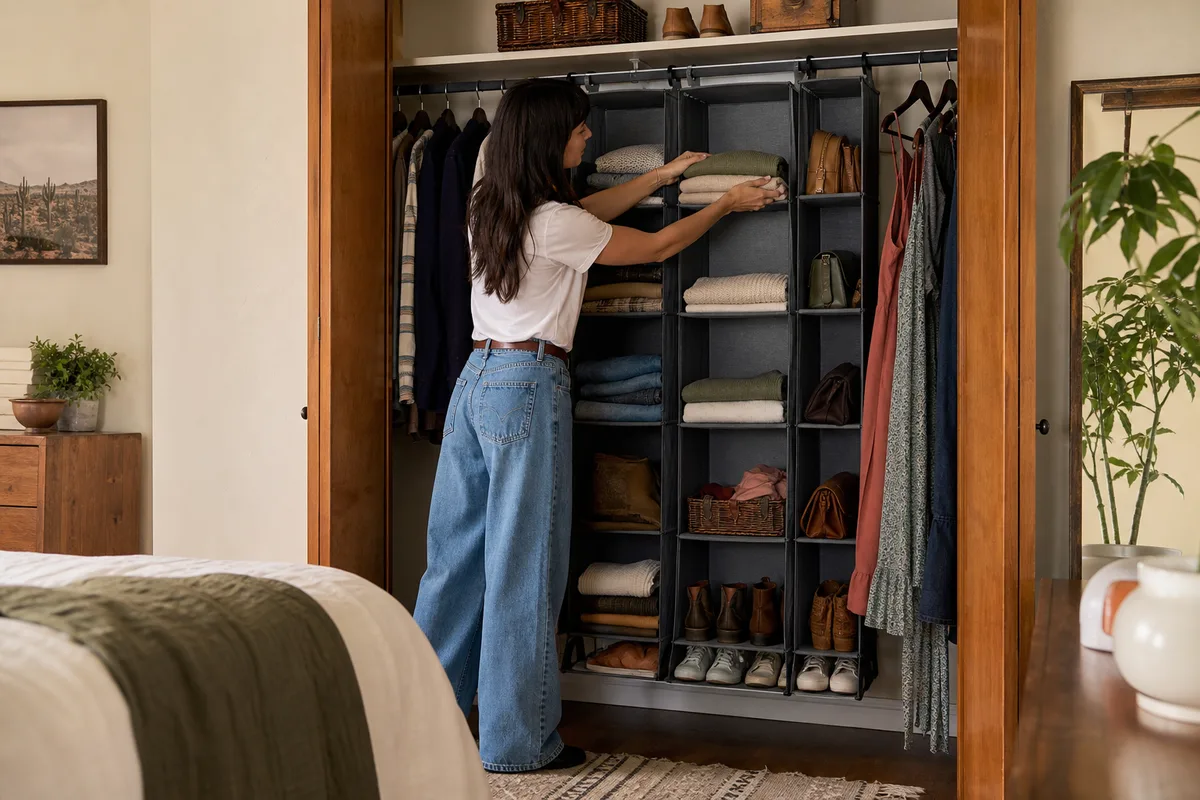
The closet offers one high shelf and one rail, while shoes, folded clothes, and bags compete below. This guide starts there, because the best household purchase is not the object with the longest feature list. It is the one that fits the room, the people using it, and the maintenance they can realistically sustain.
The short answer
Look for a well-made option centered on three things: freestanding or hanging parts that move with you, clear access to the clothes worn most often, and dimensions measured around doors and baseboards. Those priorities will narrow the field more reliably than a premium badge, a limited-time discount, or a long row of accessories.
Three ways to buy
- The everyday pick: Choose the simplest option that handles your routine five days out of seven.
- The space-conscious pick: Favor a smaller footprint, easy storage, and fewer loose parts.
- The long-view pick: Pay more only for serviceable construction, useful adjustment, or a material that meaningfully extends the product’s life.
Begin with the moment of use
Picture the item on an ordinary, mildly chaotic day. Where will it live? Who reaches for it? What has to move before it can be used? What needs washing, charging, folding, refilling, or putting away afterward? A product that performs beautifully but makes setup or cleanup harder often becomes expensive storage.
Measure the real location—including doors, handles, plugs, baseboards, and the space a person needs to stand or pass. Then write down the most common task. This prevents an occasional edge case from dictating every decision.
What deserves your attention
1. Freestanding or hanging parts that move with you
This is the first filter because it affects almost every use. Confirm it from dimensions, material information, the manual, or a retailer’s detailed specifications rather than relying on lifestyle photography.
2. Clear access to the clothes worn most often
This separates an item that works in theory from one that fits a normal week. Think through setup and cleanup, then check whether replacement parts or compatible consumables are easy to identify.
3. Dimensions measured around doors and baseboards
This is where long-term satisfaction often lives. Small ergonomic and storage details rarely dominate a product page, but they determine whether the item remains convenient after the first month.
The tradeoff worth accepting
Fabric modules are light and affordable; metal systems carry more weight and usually last longer. Decide which side matches the routine you have now. Buying for a hypothetical larger home, rare gathering, or newly imagined habit often produces more bulk than benefit.
Good value is not the lowest price per feature. It is the lowest total friction for the years you expect to keep the item.
What not to overpay for
Skip bundles whose extra pieces do not solve a named task. Decorative finishes can be worthwhile when an object stays visible, but they should not displace stability, cleanability, fit, or a sensible return policy. App connectivity is similarly optional unless remote control removes a real, repeated inconvenience.
A common mistake: A complex custom-fit solution that cannot adapt to the next home.
How to compare finalists
| Question | Why it matters | Evidence to check |
|---|---|---|
| Does it fit? | Prevents access and storage friction | Exact dimensions and clearance |
| Can it be maintained? | Protects useful life and hygiene | Manual, removable parts, care steps |
| Can it be returned? | Reduces fit and comfort risk | Current retailer policy and fees |
| Can parts be replaced? | Avoids premature replacement | Manufacturer parts catalog |
A five-minute pre-purchase check
- Measure the destination and the route used to carry the item there.
- Read the care instructions before reading the marketing highlights.
- Confirm included parts instead of inferring them from styled photos.
- Check current return terms, delivery method, and any restocking fees.
- Search the manual for the routine task you expect to perform most often.
Frequently asked questions
Should I choose the cheapest acceptable option?
For occasional, low-stress use, often yes. Spend more when the upgrade improves a daily touchpoint, enables repair, reduces ongoing consumable costs, or clearly extends useful life.
How much should return policy influence the decision?
Substantially when fit, comfort, noise, color, or room compatibility cannot be judged from specifications. Read current exclusions and return-shipping terms before ordering.
Are more features usually better?
No. A feature has value only if it improves a task you perform. Extra modes, attachments, and connected controls also create more parts to learn, store, and maintain.
Editorial note: This guide is based on household scenarios, general buying principles, and published product information. It does not claim hands-on testing of every product currently available.